
Editor’s Note: Today’s guest post comes from Ketaki Vaidya, a Senior Technical Product Manager at Amazon specializing in technical product leadership. After an unexpected September layoff, Ketaki faced Amazon’s legendary seven-round interview gauntlet with just weeks to prepare. Using the DIGS Method™ from Decode and Conquer, she transformed how she approached behavioral interviews—moving from memorized stories to a generative thinking system that could handle Amazon’s high-bar loop. Her story demonstrates how the right framework can turn structured preparation into confident performance under pressure.
September 2025 hit me like a thunderbolt. A fifteen-minute meeting. That’s all it took for my professional world to turn upside down. I learned that I was laid off from the team. While this was a business-driven restructuring and not tied to my performance, it certainly took a hit on my confidence.
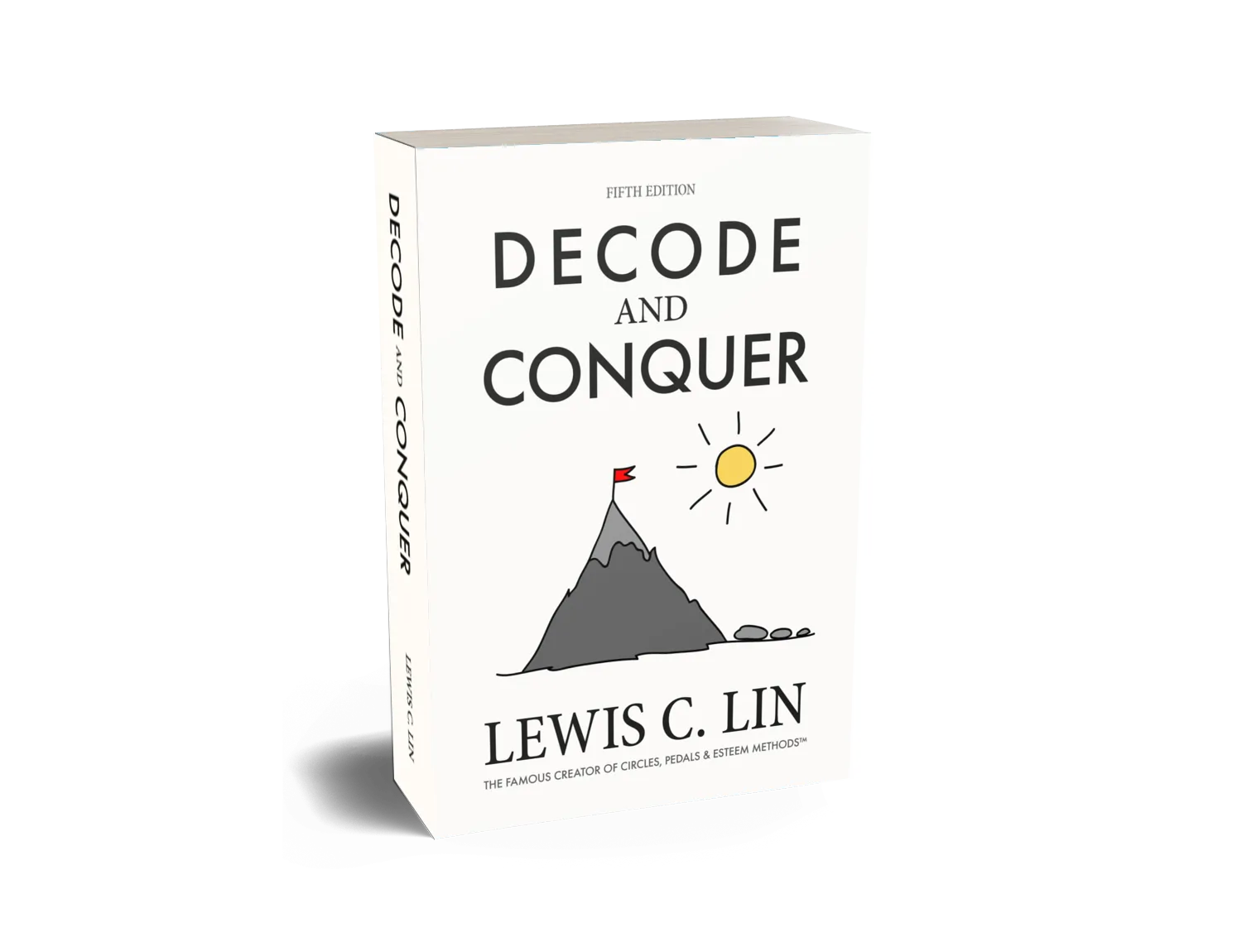
My husband recognized the weight of the moment and responded with more than words of comfort. Two books landed on our home office table. These were the 2 classic books that deserve a spot on every Product Manager’s desk: Lewis Lin’s Decode and Conquer and The Product Manager Interview.
The Amazon Challenge: Navigating a High-Stakes Interview Landscape
I soon earned an opportunity to interview for a Senior Product Manager - Technical (PMT) role at Amazon.
The Amazon Product interview process is grueling. A gauntlet of seven rounds, each designed to test not just your skills, but your entire approach to product management:
- A recruiter screening
- Hiring manager evaluation
- A five-round interview loop spanning product, engineering, and leadership teams
I knew three things going into preparation:
- Amazon interviews reward structured thinking, not improvisation
- “Product intuition” without rigor doesn’t survive seven rounds
- I needed a framework that could generate strong stories on demand, not just polish existing ones
Why Most Behavioral Frameworks Fail
Most PM candidates prepare behavioral interviews backwards.
They start with their best career moments, then try to retrofit them into STAR format:
- Situation: “I was working on [project]…”
- Task: “My role was to…”
- Action: “I did X, Y, and Z…”
- Result: “We achieved [metric]”
The problem? These answers are factually correct but forgettable. They sound like performance reviews, not conversations.
Worse, STAR doesn’t help when you get a question you didn’t prepare for. If an interviewer asks about a scenario you haven’t scripted, you’re left improvising—and improvisation under pressure rarely showcases your best thinking.
Amazon’s interview loop compounds this problem. Seven rounds. Multiple interviewers testing the same leadership principles from different angles. You can’t memorize 50+ stories. You need a system that helps you construct compelling answers in real-time.
That’s where DIGS became my operating system.
The DIGS Framework: My Backbone Through Seven Rounds
The DIGS Method became my foundation. Here’s how it differs from conventional frameworks:
D: Dramatize the Situation
This isn’t the same as STAR’s “Situation.” STAR asks “what was happening?” DIGS asks “why did this matter?”
I learned to open with stakes, not setup:
❌ STAR version: “I was working on a cross-functional project…”
✅ DIGS version: “My manager was on PTO when two engineering teams surfaced conflicting technical requirements—both with valid concerns, both with hard deadlines, and I had 48 hours to align them or risk delaying a launch that would impact Q3 revenue.”
The dramatization does three things:
- Gets the interviewer leaning in (they’re now invested in how this resolves)
- Shows what constraints you operated under (time, resources, ambiguity)
- Signals why this story demonstrates leadership principles
I: Indicate the Alternatives
Most candidates jump straight to “here’s what I did.” That makes decisions seem obvious in hindsight.
Instead, I walked through the options I considered:
- Option A: Escalate to my skip-level [pro: air cover, con: signals I can’t handle ambiguity]
- Option B: Side with the team with more seniority [pro: faster resolution, con: damages trust with the other team]
- Option C: Facilitate a working session to find technical middle ground [pro: preserves relationships and demonstrates ownership, con: tight timeline risk]
This wasn’t academic. In multiple interviews, the follow-up question was “How did you evaluate those trade-offs?” Because I’d already laid out the options, I could go deeper into my decision criteria without scrambling.
G: Go Through What You Did
Here’s where DIGS and STAR converge—but with a key difference.
STAR asks you to list actions. DIGS asks you to show your reasoning process.
I didn’t say: “I scheduled a meeting, gathered requirements, and proposed a solution.”
I said: “I started by talking to each tech lead separately to understand their constraints without the pressure of the other team in the room. I discovered the conflict wasn’t actually technical—it was about resourcing assumptions neither team had validated. I ran the numbers with our engineering manager, confirmed we could reallocate two sprints without breaking other commitments, then brought both teams together with a proposed path forward and the data to back it up.”
The interviewer isn’t just tracking what happened. They’re evaluating how I navigate ambiguity, build consensus, and use data.
S: Summarize the Impact
STAR calls this “Results.” DIGS calls it “Impact.”
The distinction matters.
Results = “We launched on time.”
Impact = “We launched on time, which contributed to hitting our Q3 revenue target. More importantly, the process I facilitated became the template our VP of Engineering adopted for resolving cross-team technical conflicts. Six months later, I heard two teams I’d never worked with reference ‘the framework Ketaki used’ when navigating a similar situation.”
Impact answers: “What changed because you were in the room?”
How I Weaponized DIGS in Preparation
I transformed DIGS from concept to muscle memory through deliberate practice:
Step 1: Story Inventory (Week 1)
I created a Notion database mapping 13 career moments to Amazon’s leadership principles. Each entry had:
- Raw facts (what happened, when, who was involved)
- DIGS structure applied
- Leadership principles demonstrated
- Potential follow-up questions
Step 2: Repetition Until Fluency (Weeks 2-3)
I recorded myself practicing answers. The first attempts were painful—long-winded, defensive, scattered. I iterated on:
- Cutting 30% of the words from “Dramatize” (I was over-explaining context)
- Adding a third alternative to “Indicate” (two options sounds binary, three shows range)
- Removing hedging language from “Go Through” (“I think,” “kind of,” “probably”)
Step 3: Stress Testing (Weeks 4-5)
I did around 20 behavioral mock interviews through Lewis’ Slack community. The breakthrough came when a mock interviewer asked about a leadership principle I hadn’t prepared for.
Instead of panicking, I pulled from my database, identified the closest story, and restructured it in real-time using DIGS. It wasn’t perfect, but it was coherent. That’s when I realized: DIGS isn’t a script. It’s a thinking tool.
DIGS in Action: A Real Interview Example
One interviewer asked: “Tell me about a time you handled conflicting stakeholder priorities in a technically complex product.”
Here’s how DIGS shaped my answer in real-time:
Dramatize: I opened with stakes, not setup. “My manager was OOO when two engineering teams surfaced conflicting technical requirements—both valid, both urgent, both impacting a launch tied to Q3 revenue. I had 48 hours to resolve it or escalate, and escalation would signal I couldn’t handle ambiguity.”
Indicate: I laid out three paths I considered: escalate to my skip-level, side with the more senior team for speed, or facilitate a working session to find middle ground. I explained why each had merit and why each carried risk.
Go Through: I walked through my process: separate conversations with each tech lead to understand constraints without pressure, discovering the conflict was about resourcing assumptions, running the numbers with our EM, then bringing both teams together with a data-backed proposal.
Summarize: I closed with impact: “We launched on time, hit our Q3 target, and the VP of Engineering adopted my facilitation approach as the template for cross-team technical conflicts. Six months later, teams I’d never worked with were referencing ‘Ketaki’s framework.’”
What I noticed: The interviewer leaned in after “Dramatize.” They started taking notes during “Indicate.” By “Summarize,” they weren’t just evaluating my answer—they were tracking my decision-making process.
That’s the difference between a good story and a story that demonstrates how you think.
A Tactical Note: How I Used AI to Strengthen the “G” in DIGS
The “Go Through What You Did” phase of DIGS requires concrete details. Vague answers like “I worked with engineering to find a solution” don’t survive Amazon’s bar.
I used AI tools to make my collaboration stories more tangible:
When preparing stories about technical trade-offs, I used internal AI tools to:
- Explore edge cases I might not have considered in the original project
- Stress-test my reasoning (“What would break if we chose Option B?”)
- Identify follow-up questions an interviewer might ask
When preparing stories about product decisions, I used Lovable and v0 by Vercel to:
- Create lightweight mockups showing how I translated requirements into flows
- Build “thinking artifacts” I could reference in interviews (“Here’s the prototype I used to align stakeholders before engineering got involved”)
These weren’t polished designs. They were proof points.
When I mentioned in interviews that I’d used v0 to create a rough prototype before a technical discussion, it signaled something specific: I reduce friction for engineers by doing upfront work to clarify ambiguity.
That’s a PMT competency Amazon cares about. And it emerged naturally from strengthening my DIGS stories with concrete artifacts.
The Real Test Amazon’s Interview Loop Measures
Here’s what I misunderstood about Amazon interviews before DIGS:
I thought Amazon was testing whether I had impressive career stories.
They weren’t.
Amazon was testing whether I could generate structured thinking under constraints I couldn’t prepare for. Seven rounds. Multiple interviewers asking adjacent versions of the same leadership principle. Unexpected follow-ups designed to see if my story holds up under scrutiny.
You can’t memorize your way through that. You need a thinking system.
DIGS gave me that system. By the final round, I wasn’t defending my past decisions—I was demonstrating how I approach ambiguity, evaluate trade-offs, and drive clarity in real-time.
The framework didn’t make my answers robotic. It made them intuitive.
And that’s the difference between surviving Amazon’s loop and being someone the entire panel wants on their team.
The Outcome
I received a strong offer and accepted the role.
I celebrated the moment by treating my husband and myself to a Lady M cake (highly recommend the Tiramisu Mille Crêpe).
Why I’m Writing This
I didn’t stumble into this outcome. I leaned on a framework built by someone who cared enough to systematize hard-earned experience.
Lewis Lin’s Decode and Conquer and The Product Manager Interview gave me a shared language with interviewers and a way to stay grounded under pressure. That’s worth acknowledging publicly. Thank you, Lewis.
If you’re navigating a similar transition—especially if you’re facing a high-stakes interview loop—feel free to reach out on LinkedIn. I’m happy to help you refine your stories or pressure-test your DIGS structure.
Good frameworks compound when shared.
Ketaki Vaidya is a Senior Technical Product Manager at Amazon and host of the Personal Branding for Professionals podcast. She has been featured in Business Insider, Entrepreneur Magazine, and the 1 Million Women in STEM campaign, and has spoken at 15+ global conferences including Grace Hopper Celebration, Product World, Women in Product, and the WomenTech Global Network Conference. She mentors PM candidates navigating high-stakes career transitions and can be reached on LinkedIn.