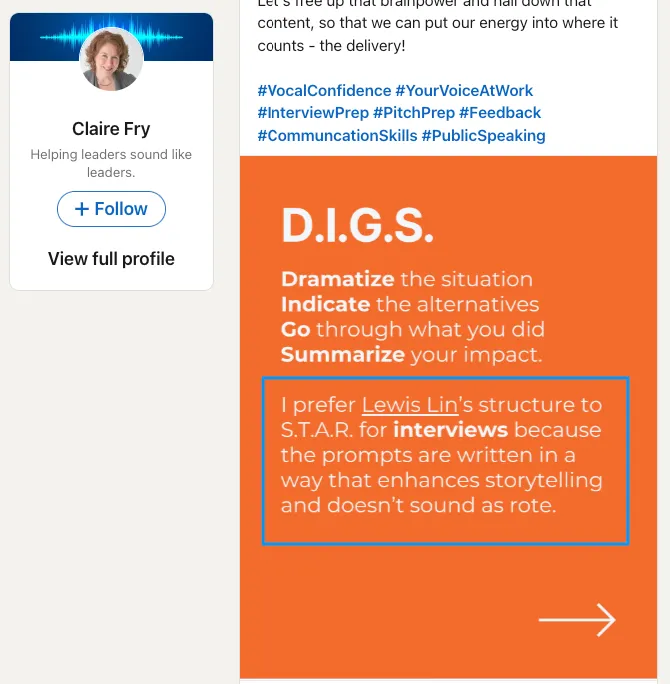
Top executive coaches prefer DIGS over the STAR format for interviews because it enhances storytelling and doesn’t sound boring or mechanical. But before we dive into the benefits of DIGS, let’s first understand the STAR format, which has been a staple in job interviews for decades.
The STAR Format: A Classic Framework
The STAR format is a widely used framework for answering behavioral interview questions. It’s an acronym that stands for:
- S: Situation: Set the context for the story
- T: Task: Explain the task or challenge you faced
- A: Action: Describe the actions you took to address the task
- R: Result: Share the outcome or results of your actions
The STAR format is designed to help candidates provide clear, concise, and structured responses to interview questions. It’s particularly useful for showcasing specific skills, accomplishments, and experiences. By following the STAR format, candidates can ensure they cover all the necessary details and provide a comprehensive answer.
The Limitations of STAR
While the STAR format is effective, it can sometimes come across as mechanical and formulaic. Candidates may sound like they’re reciting a scripted answer, rather than sharing a genuine story. This is where DIGS comes in – a framework that builds upon the STAR format but encourages more nuanced and engaging storytelling.
The DIGS Method™: Elevate Your Storytelling in Interviews
The DIGS Method™, developed by Lewis C. Lin, is a superior framework for tackling behavioral interview questions. It’s designed to help you tell an engaging and entertaining story that showcases your skills and experiences. The DIGS Method™ stands for:
- D: Dramatize the situation
- I: Indicate the alternatives
- G: Go through what you did
- S: Summarize your impact
How to Use DIGS
Let’s break down each component of the DIGS Method™ and explore how to apply it in your interviews:
- Dramatize the situation: Amplify the story with details and context. Make it engaging and relatable.
- Indicate the alternatives: Show that you considered other options and explain why your choice was the best.
- Go through what you did: Describe your actions and decisions in a clear and concise manner.
- Summarize your impact: Highlight the results and impact of your actions, using concrete details and numbers where possible.
Examples and Benefits
Using the DIGS Method™, you can create a story that sounds like a casual conversation between friends, rather than a scripted answer. For example:
- “My boss stormed into my office, saying, ‘Ji-hyun has a family emergency. You’ll have to pitch the new product feature to our leading client. If you don’t secure the $50 million deal, we’ll have to lay off 30% of the company.’”
- “We could have pushed the timeline back, but that would have compromised our overarching timeline for releasing the new product.”
- “During this busy time, one of my colleagues forgot to respond to an important email. I tried to explain that I wasn’t meaning to put undue pressure on them, and we were able to have a productive conversation about the current workplace environment.”
- “This whole situation showed my boss that I can step up and take charge of projects with important timelines. If we hadn’t kept the ball rolling, I’m not sure our product would have been as successful as it was. After release, we had 30K new downloads in the first month alone and were able to lock in deals with 20 new advertisers on the platform.”
By using the DIGS Method™, you’ll be able to:
- Create a more engaging and memorable story
- Showcase your analytical and problem-solving skills
- Highlight your ability to think critically and make informed decisions
- Demonstrate your impact and results in a concrete and measurable way
Incorporating the DIGS Method™ into your interview preparation will help you stand out from the competition and showcase your skills and experiences in a more engaging and effective way.