In the world of large-scale projects, cost overruns are more than just occasional hiccups—they’re the norm. A recent analysis of various project types reveals a startling trend of budgets spiraling out of control, with some sectors faring far worse than others. Let’s dive into the numbers and explore what they mean for project planning and execution.
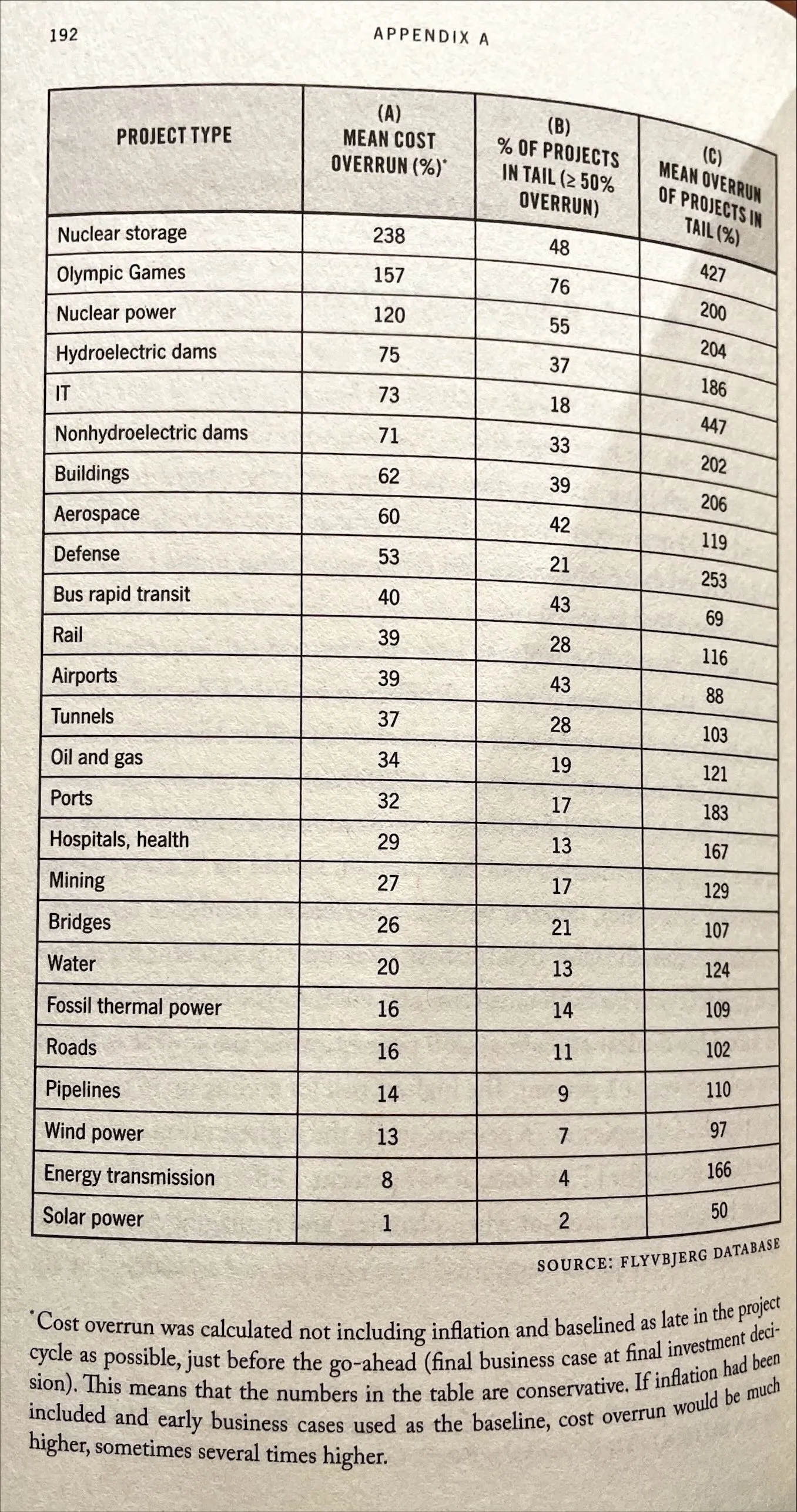 Source: How Big Things Get Done by Flyvbjeg
The Big Picture: No One’s Immune
First and foremost, it’s crucial to understand that every project type examined in the study experienced some level of cost overrun. From energy infrastructure to public transportation, not a single category managed to consistently stay within budget. This universal trend underscores the complexity and unpredictability inherent in large-scale projects.
The Worst Offenders
Topping the list of budget-busters are nuclear storage projects, with a staggering average cost overrun of 238%. Close behind are Olympic Games at 157% and nuclear power projects at 120%. These figures suggest that highly complex, long-term projects with significant public scrutiny are particularly prone to exceeding initial cost estimates.
Energy: A Mixed Bag
The energy sector shows a fascinating spread of results. While nuclear power projects struggle with major overruns, renewable energy sources fare much better. Wind power projects average only a 13% overrun, and solar power leads the pack with a mere 1% average overrun. This disparity could have significant implications for energy policy and investment decisions.
The “Tail” Risk
An interesting metric in the study is the percentage of projects in the “tail”—those experiencing overruns of 50% or more. IT projects, despite a relatively modest average overrun of 73%, have a whopping 18% of projects in this high-risk tail. This highlights the importance of looking beyond averages to understand the full risk profile of different project types.
Conservative Estimates
It’s worth noting that these figures are likely conservative. The study calculated overruns without accounting for inflation and used late-stage baselines. If earlier estimates or inflation were factored in, the overruns would be even more severe—potentially several times higher in some cases.
Implications for Project Management
These findings have serious implications for project planners, investors, and policymakers:
- Risk Assessment: The consistent presence of overruns suggests that current risk assessment methods may be inadequate.
- Contingency Planning: Projects should build in larger contingencies, especially in high-risk categories.
- Technology Choices: In the energy sector, the stark difference between nuclear and renewable projects might influence technology selection.
- Public Communication: For projects with public funding, setting realistic expectations about costs from the outset is crucial.
Conclusion
The data paints a clear picture: cost overruns are a pervasive challenge across all types of large-scale projects. While some sectors perform better than others, no area is immune to the complexities that drive costs beyond initial estimates. As we move forward, it’s crucial that we learn from this data, refining our planning processes and risk management strategies to bring these overruns under control. Only then can we hope to deliver projects that meet both our budgetary and societal needs.