Summary: Ditch the STAR method and embrace DIGS for a more engaging and successful interview experience
Introduction
Are you tired of using the STAR method for your behavioral interviews and not getting the results you desire? You’re not alone. Many job seekers have found that the STAR method, while helpful in structuring answers, can lead to monotonous and uninspiring responses. I created the DIGS method to help you address that.
DIGS stands for:
- Dramatize the situation
- Indicate the alternatives
- Go through what you did
- Summarize your impact
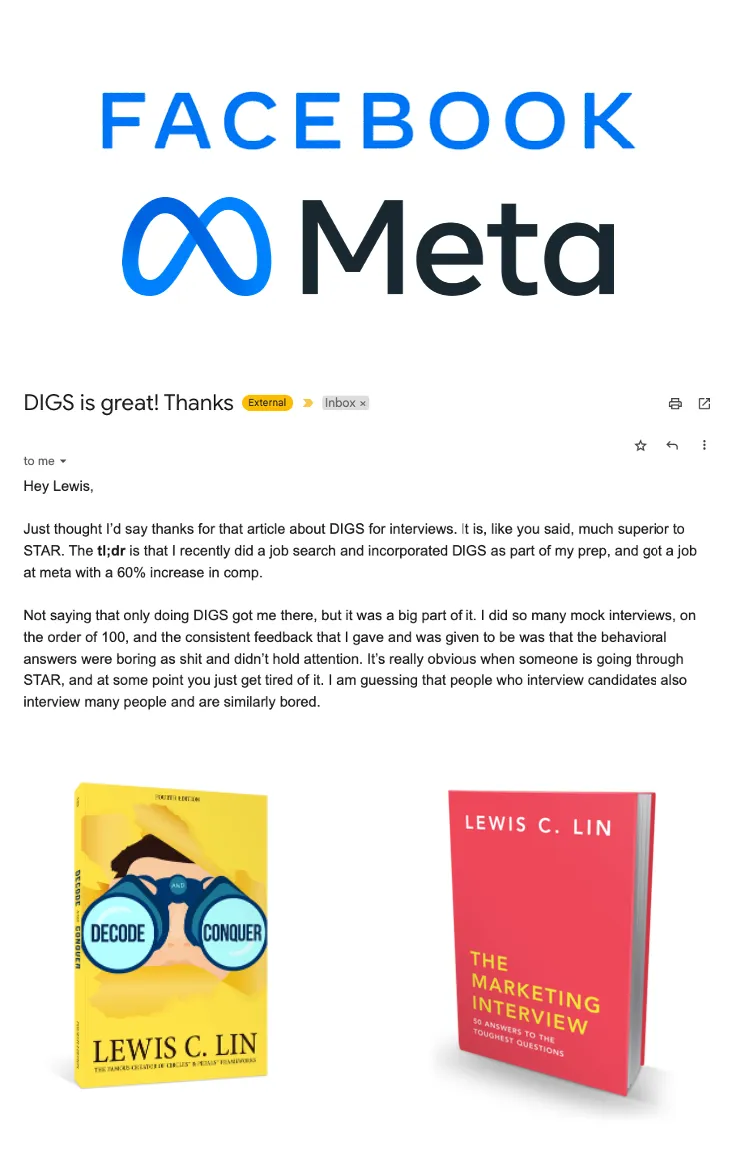
In this blog post, we’ll share the story of one reader who used DIGS to land a job at Meta with a whopping 60% increase in compensation.
The Problem with STAR
The STAR method, which stands for Situation, Task, Action, and Result, has long been the go-to approach for answering behavioral interview questions. However, many job seekers have found that this method can make their answers sound boring and repetitive. Interviewers often show their boredom visibly, which can be disheartening for candidates who have prepared diligently.
The DIGS Difference
The DIGS method, featured in my product management and marketing interview books, offers a more engaging and memorable approach to answering behavioral questions. Here’s a quick breakdown of the DIGS method:
- Dramatize the situation: Paint a vivid picture of the challenge you faced to capture the interviewer’s attention.
- Indicate the alternatives: Show that you considered different options before deciding on the best course of action.
- Go through what you did: Explain the steps you took to address the situation, highlighting your skills and expertise.
- Summarize your impact: Wrap up your answer by showcasing the positive results of your actions.
A Reader’s Success Story
One of our readers was struggling to make an impression in his interviews using the STAR method. After discovering the DIGS method, he decided to give it a try. John found that the DIGS method allowed him to tell more engaging stories, showcasing his problem-solving skills and ability to think critically.
During his interview with Meta, John used the DIGS method to answer questions about his experience managing a challenging project. He dramatized the situation by describing the high stakes and tight deadlines, indicated the alternatives he considered, went through the steps he took to successfully complete the project, and summarized the impact his actions had on the company’s bottom line.
The result? John received a job offer from Meta, which led to a 60% increase in compensation compared to his previous role. He credits the DIGS method for helping him stand out from other candidates and secure the position.
Conclusion
If you’re tired of the STAR method and want to improve your chances of acing your behavioral interviews, consider adopting the DIGS method. By dramatizing the situation, indicating alternatives, going through your actions, and summarizing your impact, you’ll create more engaging and memorable answers that will impress your interviewers.
Who knows, you might just land your dream job with a significant salary increase, just like this reader who got an offer at Meta.